The impossible in-tray at No. 10: Why Keir Starmer is the sixth prime minister in 10 years – and faces a new challenger for his job
Uneasy lies the head that sleeps at No. 10 Downing Street. When not brooding on the National Health Service, immigration, Brexit and other sundry headaches, British Prime Minister Keir Starmer must reckon with challengers for his job and growing discontent within his own party. Andy Burnham, the former Labour mayor of Greater Manchester, contested and won the parliamentary seat of Makerfield in a by-election on 18 June, to challenge the prime minister for his post. The miseries seem endemic to the office; Starmer inherited them from his predecessors, who suffered many of the same afflictions.
In the last decade, Britain has had six prime ministers. Theresa May, who succeeded David Cameron, and her successor, Boris Johnson, each served around three years, while Liz Truss, who came after Johnson, lasted only 49 days before resigning in ignominy in the autumn of 2022. Rishi Sunak, who succeeded her and governed for just under two years, went to the country in July 2024 and lost, ending 14 years of Conservative rule.
Now, not yet two years into Labour’s return to office, Starmer faces growing criticism from sections of his party alarmed by Labour’s poor performance in local elections, which have seen voters drift towards both the right-wing Reform UK and the left-wing Greens.
The problem, it must be said, did not begin with Starmer. It began with a referendum.
The referendum that changed everything
In June 2016, Britain voted narrowly to leave the European Union — a decision that has haunted the country’s politics ever since. The referendum triggered a profound political realignment whose consequences are still unfolding.
Brexit consumed Theresa May, who failed three times to get her withdrawal agreement through Parliament. It made Boris Johnson: he rode the slogan “Get Brexit Done” to a thumping majority in 2019 before being brought down by a succession of scandals, including the so-called Partygate — the illegal social gatherings at Downing Street during the Covid-19 pandemic. Liz Truss lasted barely seven weeks after her unfunded “mini-Budget” triggered turmoil in financial markets. Rishi Sunak restored order and made progress in negotiations with Brussels, easing some of the friction created by Brexit. Yet the electorate was ready for change and handed power to Labour in 2024.
To understand Brexit, one must understand a peculiarly English habit of mind: the instinct for what the Victorians called “splendid isolation”. For much of the nineteenth century, Britain preferred to stand apart from the shifting alliances of continental Europe, relying instead on its navy, its empire and its commercial power. Yet even then Britain was never wholly detached from Europe. It played a leading role in the Napoleonic Wars, fought alongside France against Russia in the Crimean War, and later joined France and Russia in the Triple Entente that fought against Germany, Austria-Hungary and the Ottoman Empire in the First World War.
The island mentality, nevertheless, endured. Even after two world wars forced Britain into close cooperation with its neighbours, many Britons remained uneasy about European integration. As the European Community evolved into the more tightly knit European Union — with a single market, open borders and, for many members, a common currency — a substantial section of the British electorate came to resent Brussels’ regulations as an encroachment on national sovereignty. They voted for Brexit to break free from Europe.
And yet Brexit has brought no peace. Every election since 2016 has in some sense been a referendum on the referendum — a continuing argument over whether Brexit liberated Britain or harmed the country. The Conservatives, who delivered Brexit, were themselves hollowed out by it. The rapid succession of Conservative prime ministers since David Cameron’s resignation — Theresa May, Boris Johnson, Liz Truss and Rishi Sunak — reflected the instability that Brexit unleashed.
Labour inherited a difficult landscape. Starmer came to office promising “change” but has struggled to give the slogan a clear and compelling meaning. NHS waiting times remain high. Living costs continue to weigh heavily on households. Economic growth has been sluggish. Meanwhile, the political terrain beneath Labour’s feet has shifted dramatically, thanks largely to one man and one party.
The rise of Reform
Nigel Farage and Reform UK have emerged as the principal disruptive force in British politics. Reform has focused on reducing both legal and illegal immigration, stopping small-boat crossings across the English Channel, opposing net-zero climate policies and campaigning against what it calls “woke” institutions and excessive taxation. The party has steadily expanded its presence in local and national politics, alarming Labour MPs in the so-called Red Wall constituencies of northern England and the Midlands that once formed Labour’s electoral heartland.
Whose anxiety is it, anyway?
The immigration question cuts to the heart of what Britain is, and what it is becoming. There remains a segment of British society that feels, sometimes resentfully, that the country it grew up in has changed beyond recognition. The faces in the neighbourhood are different, the languages heard on the high street are different, and the cultural landscape itself has changed.
This sentiment is not confined to the white working class. Conservative leader Kemi Badenoch, herself of Nigerian heritage, has argued that immigration has occurred too rapidly for successful integration. Priti Patel, whose parents of Indian origin arrived from Uganda, championed some of the toughest immigration policies of recent years, including the ultimately unsuccessful scheme to relocate illegal immigrants denied asylum in the UK to Rwanda.
Euroscepticism among sections of Britain’s South Asian population was stronger than many expected. Several constituencies with substantial South Asian populations, including Luton, Bradford and Slough, recorded significant Leave votes in 2016. Some voters supported Brexit because they opposed the principle of unrestricted movement within the European Union and wanted Britain to exercise greater control over immigration.
Two Britains
Yet there is another Britain, one that has been quietly remaking itself. The Royal Shakespeare Company routinely casts Black and Asian actors in leading Shakespearean roles. Netflix’s enormously successful Bridgerton imagines a Regency England in which race is no barrier to aristocratic status. For many viewers, this is liberating fantasy; for others, it is an unwarranted tampering with history.
As Britain has become more diverse, new tensions have inevitably emerged alongside new opportunities. The country has grappled with Islamist extremism, controversies surrounding grooming gangs, debates over integration and national identity, and episodes of racism directed at minority communities.
Questions are, therefore, being asked not only about Britain’s identity at home but also about its place in the world.
In their 2018 book Shadows of Empire, the political scientists Michael Kenny and Nick Pearce observed that many elite Brexiteers hoped to replace close European integration with deeper trade and security ties among the English-speaking nations of the Anglosphere — principally the United States, Canada, Australia and New Zealand.
The vision has not entirely survived contact with reality. The trade agreements negotiated after Brexit have generally been modest compared with the economic importance of the European market. Nor has the United States displayed any overwhelming eagerness to reward Britain for leaving the European Union. The so-called Special Relationship remains valuable, but it has always rested more on strategic interests than sentiment. Successive American administrations have made clear that the relationship with Britain depends on American priorities.
Brexit has also revived questions about the future of the United Kingdom itself. Scotland voted decisively to remain in the European Union, and the Scottish National Party continues to argue that an independent Scotland could eventually rejoin it. The Brexit story is therefore not only about Britain’s relationship with Europe but also about the cohesion of the United Kingdom.
Whither then, Britain? The question concerns not only the British but others too.
A voice on the shortwave
Consider an older Indian who grew up in the 1960s, when Britain still cast a long shadow across the Commonwealth. For him, Britain was not merely a country but a fount of civilization, accessible through a short-wave radio where the chimes of Big Ben punctuated the measured voice of the BBC World Service. In a world before the internet flattened distances, that voice carried authority. It told you what had happened in the world, and you believed it. Britain, in this imagining, was not merely a nation but a standard.
It was also a literary culture of uncommon richness. John le Carré, whose Cold War novels were devoured throughout the former Empire, understood better than most what decline felt like from the inside. His George Smiley — weary, intelligent, principled and quietly melancholic — was in many ways a symbol of Britain itself: a once-formidable power managing its decline with as much dignity as it could muster. Jan Morris, the great Welsh-British historian and travel writer whose Pax Britannica trilogy chronicled the rise and fall of the British Empire with elegance and clarity, died the same year. With them passed something of an older Britain — a generation of writers who chronicled both its grandeur and its decline.
The BBC itself is under pressure, particularly from parts of the conservative press opposing the TV licence fee; they argue that those who do not watch the BBC should not have to pay for it.
Yet Britain retains immense reserves of soft power. Its universities remain among the world’s most prestigious. Its literature continues to command a global readership. Its cultural institutions still exert influence far beyond its shores. Lisa Nandy, the Culture Secretary, has proposed reforms intended to give the BBC greater long-term security. Britain may no longer dominate the world, but it remains one of the world’s most influential cultural powers.
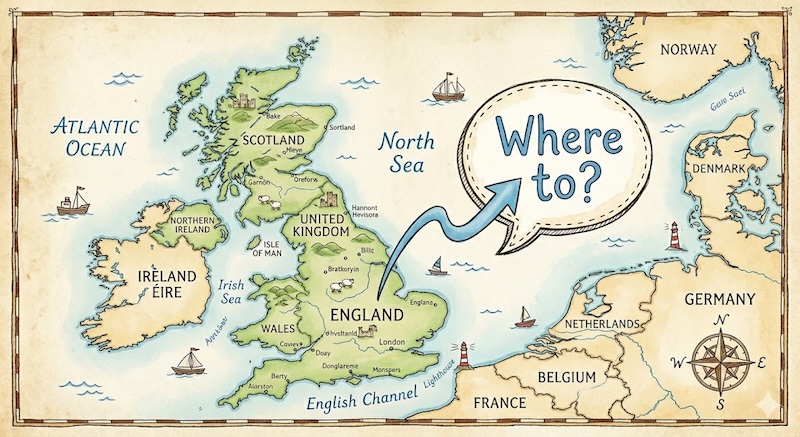
The question is: after Brexit, what next?
Britain voted to free itself from Brussels, but what should replace the rejected framework remains unclear. It has become a country where prime ministers rise and fall with unusual speed, where the traditional two-party system is under pressure from insurgent movements, and where a charismatic populist with a gift for grievance often commands as much attention as the government itself.
The dreamers of the Anglosphere hoped to revive an imagined fellowship of English-speaking nations. But clocks do not turn back, and nostalgia — whether the wistfulness of a Brexiteer or an ageing Indian listening to the BBC World Service — cannot be the stuff of foreign policy.
Britain remains one of the world’s largest economies, its leading universities are second to none, and its culture and heritage continue to attract people from all over the globe — and yet there is a pervasive sense of drift, of a nation at a loss. Post-colonial Britain, shorn of its empire, is also a nation searching, with no little anxiety, for its place in the world.