As an old-timer with a love for newspapers and magazines, I am glad to see traditional news writing getting a new lease of life from Google. For what are AI Overviews — those snippets of information sometimes found at the top of Google’s search results pages — but quick summaries like the opening paragraphs of a news story? Yes, AI Overviews are old-school, but Google is driving innovation at the same time with the personalised Q&As it is generating, branded with a flourish as AI Mode.
One invites you to explore endlessly; the other gives you the facts upfront. Together, Google’s AI Overviews and AI Mode are redefining search—and leaving websites behind.
Photo credit: AI-generated/Gemini
AI Mode
Google didn’t get there first. It officially rolled out AI Mode in the USA and across much of the world in 2025, more than two years after Perplexity.ai launched its conversational search engine to the public in December 2022. That doesn’t take anything away from Google, though, which has produced a remarkably addictive new wrinkle in the search business — one that can keep web surfers hooked for hours.
I just typed the word “whodunnit” and entered AI Mode, and Google went from explaining what a whodunnit is — a mystery story or movie — to classics of the genre (The Adventures of Sherlock Holmes, Murder on the Orient Express), celebrated authors (Arthur Conan Doyle, Agatha Christie), sub-genres (locked-room mysteries, police procedurals, psychological thrillers, historical mysteries, regional noirs), and more.
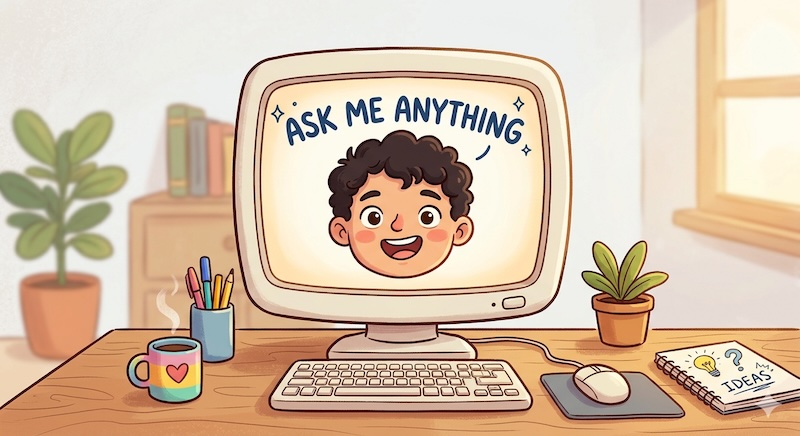
The information I gathered may be of no earthly use to me, but it was fascinating. The “Ask me anything” tagline in the empty chatbox was an irresistible come-on, which I compulsively overwrote, asking question after question in a session that was both informative and entertaining. I am sold on AI Mode. It is guaranteed to hook the curious.
AI Overview
While AI Mode invites netizens to explore anything on their minds, AI Overviews answer their questions directly. They do not prompt users to “Ask me anything” further, though sometimes, at the end of the answer, they may be invited to “Dive deeper in AI Mode”.
There is no telling when a Google search will lead to an AI Overview appearing at the top of a results page.
One of my searches did lead to an AI Overview, but it merely said: “AI Overviews appear at the top of Google search results when algorithms determine a synthesis of information is more helpful than a list of links, particularly for complex, informational, or long-tail queries. They act as a summary, often generated for queries requiring comparison, step-by-step instructions, or deep research, rather than simple navigation.”
While not every Google search elicits an AI Overview, and AI Mode comes into play only when a user activates it, they may still be affecting websites. “Publishers fear AI summaries are hitting online traffic,” reported the BBC in September 2025.
It is unfortunate for websites, content creators and marketers that their traffic is declining. Still, people cannot be faulted for preferring to get information directly from Google rather than going through websites. They could not do that in the past, when Google only provided links to sites with relevant material. But now Google itself has the information — the search giant of yore has become an “answer engine”, and information seekers can bypass websites.
However, artificial intelligence cannot be taken for gospel truth. Chatbots themselves warn that they are fallible. “Gemini is AI and can make mistakes,” the Google chatbot admits. Yes, we have to double-check—and not just when dealing with AI. Mistakes crop up in the mainstream, too.
Wikipedia, as of April 20, 2026, had this to say about the Singapore minister Gan Siow Huang:
“Gan Siow Huang (born 28 September 1974) is a Singaporean politician and former brigadier-general who has served as Minister of State for Education and Minister of State for Manpower since 2020.”
Wikipedia is wrong. Gan Siow Huang has been Minister of State for Foreign Affairs and Trade and Industry since May 23, 2025, when a new government was sworn in under Prime Minister Lawrence Wong. And yet, almost a year later, Wikipedia has still not got her designation right.
So we have to double-check information even from well-known sources.
Getting information directly from Google will no doubt hurt the websites we bypass and the people behind them. But that is technology. It has always been a disruptor.
Early blogs
The websites in jeopardy today bear no resemblance to the early blogs. The originals were a different breed — far more personal. Old-timers will remember the pseudonymous Salam Pax, who wrote his English-language blog Where Is Raed? in Baghdad during the Iraq War in 2002–2003. Another talked-about blog from that era was Belle de Jour: Diary of a London Call Girl.
Blogs back then contained personal musings and first-hand narratives; they were not search-engine-optimised to attract readers or market products. The commercialisation came later.
Now the business is taking another turn, with Google no longer just the intermediary leading readers to blogs, but providing the information itself.
The business is changing — moving forward and, at the same time, taking a traditional turn.
AI Overviews, as I said at the beginning, resemble traditional newswriting. They provide the answer or information sought by the reader directly, without preamble.
Blogs, by contrast, tell stories, offer personal opinions and anecdotes, and aim to keep readers engaged longer. Blog posts and articles are encouraged to be of a certain length to satisfy Google’s preferences.
Inverted pyramid
No such constraints bind news stories. News reports are expected to go straight to the heart of the matter and tell who did what to whom, how, when and why in the very first paragraph.
The style is called the “inverted pyramid”, putting all the important information at the very beginning of the story so that the essence is not lost if the reader cannot finish reading it.
The inverted pyramid style of news writing is said to have originated in America in the mid-19th century, when messages began to be sent by electric telegraph. It was expensive — senders had to pay by the word. So reporters tried to convey all the facts in as few words as possible.
It proved useful in laying out newspapers, too, as editors could cut reports from the bottom without losing the key facts at the top. Readers could also absorb the information quickly.
No wonder the inverted pyramid continues to be used by news organisations from the BBC to Bloomberg, from AP to Reuters.
And now Google is using it too.
Bravo, Google! It heartens an old-timer like me, accustomed to a lifetime of news delivered in inverted pyramids, to see continuity in the midst of change.